ADVERTISING DISCLOSURE: This page is sponsored content and contains affiliate links. We may be compensated if you make a purchase.
Written for readers over 50

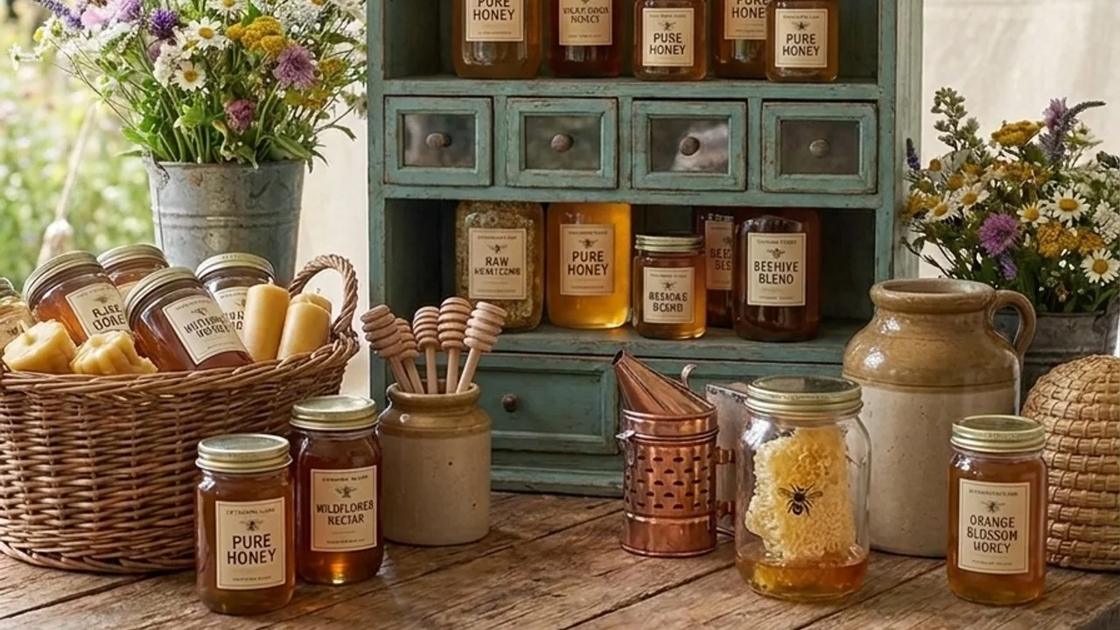
Twelve jars on one table, and the question nobody asks the beekeeper

Wildflower, orange blossom, raw comb, spring blend. They sit side by side looking almost identical, and they are not the same thing at all. Here is what actually changes between them — and, separately, what research says about the way memory works after 50.

A beekeeper market stall under canvas with jars of wildflower and orange blossom honey on a painted cabinet Free presentation • Turn your sound on Watch the free presentation No signup • Closes when you close the tab

Sponsored content. Educational only — this is not medical advice.

Runs about 8 minutesEducational contentSound recommended
First, the honest part

Why memory shifts after 50

Four things that are rarely explained properly — and that have very little to do with willpower.

01

Attention is usually the bottleneck

Most of what people call forgetting was never encoded in the first place. The keys went down while you were listening to the radio and answering a question. Divided attention gets more expensive with age, and the memory takes the blame.

02

Hearing changes cost more than sound

When speech is harder to make out, more effort goes into decoding it and less is left for holding the content. Hearing and cognition are studied together for exactly this reason, which is why an unglamorous hearing test is a reasonable first step.

03

The afternoon dip is often a plate problem

A breakfast that is mostly refined carbohydrate is a familiar setup for the mid-afternoon slump many people describe as fog. What is on the plate and when it is eaten belong in the picture.

04

Some of it is on the medicine shelf

A number of very common medications list drowsiness or reduced concentration among their effects, and mild dehydration does the same. Both are worth a five-minute conversation with a pharmacist before you assume anything else.

Setting the record straight

Three claims worth pushing back on

Myth

“The right supplement gives you a younger memory.”

Reality

No food or supplement is permitted to claim it treats, prevents or reverses a cognitive condition, and any page that says otherwise is telling you something about itself. Food is food. It belongs in the picture alongside sleep, movement and medical care — not instead of them.

Myth

“I just need to concentrate harder.”

Reality

Attention behaves more like a budget than a muscle you can strain. Trying harder while three things compete for the same budget usually costs more than it returns. Removing one of the three tends to work better than pushing on the fourth.

Myth

“At my age it is too late to change anything.”

Reality

Studies of healthy ageing routinely enrol people in their sixties, seventies and beyond, because that is precisely the window researchers are interested in. Nobody can promise you an outcome, but the premise that the door has already closed is not what the literature is built on.

The frame

Three parts of an ordinary week

None of this is a treatment for anything. It is the plain structure that the market-table habit sat inside, written out so you can see how small it really is.

1

Cut the competition, not the effort

One thing at a time when it matters. Say the name out loud when you meet someone. Put the keys in the same place before you take your coat off. Most of what looks like memory improvement is really attention protection.

Test it for a week on one object only. Keys are the easiest.
2

Build a plate, then a walk

Protein and fibre before anything sweet, and a walk of twenty to thirty minutes on most days. A spoonful of honey belongs here if you want it — as part of a meal, counted as the sugar it is, not as a fix on an empty stomach.

If you manage diabetes, this paragraph is a question for your clinician, not a plan.
3

Give the night a job

A steady bedtime, a dark cool room, and the last coffee earlier than feels necessary. Consolidation happens overnight, so a week of poor sleep will imitate a memory problem convincingly.

Loud snoring or daytime sleepiness deserves a proper medical opinion.
Back to the table

Why no two jars are the same

Honey is a record of a place and a fortnight. Whatever was flowering within a few kilometres of the hive during that window ends up in the jar, which is why an orange blossom harvest is pale and floral while a late-summer wildflower one can be dark, thick and almost savoury. Same bees. Different fields. Genuinely different product.

What happens after the harvest matters just as much. Heating and fine filtering make honey pour cleanly and sit clear on a shelf for a long time, and they also strip out the pollen that tells you where it came from. Raw, unfiltered honey behaves less conveniently: it is cloudy, it thickens, it varies from batch to batch. That variation is the point, not a defect.

Which is why the label is worth reading slowly. Look for the floral source, the country of origin, the harvest period and the word raw or unfiltered. Treat a jar with no origin, no season and a perfectly uniform colour as a blend that has been standardised for the shelf rather than for you.

One thing worth knowing

Crystallisation is not spoilage. Raw honey turning grainy or solid in the cupboard is normal behaviour for a supersaturated sugar solution, and it says nothing bad about quality. Warm the jar gently in water if you want it liquid again. A honey that never changes at all is usually one that was processed to prevent it.

Sound familiar?

Six moments readers keep describing

These are common everyday experiences, not symptoms of any specific condition, and nothing on this page can tell you what they mean for you.

The introduction that evaporates

You shake hands, you hear the name clearly, and four seconds later it is gone as if it was never said.

The word that will not come

You know its shape, its first letter and roughly how it sounds. Your mouth simply refuses to produce it on request.

Standing in the kitchen with no orders

You came in for something specific. The room offers no clues, so you open the fridge on principle.

Restaurants got harder

Between the music and the next table, following one conversation now takes real work, and by dessert you are tired.

Checking the door twice

You locked it. You are almost sure you locked it. You go back anyway, because almost is not the same as sure.

Everything moved to the phone

Appointments, the shopping, birthdays you once knew by heart. It works, and it still feels like something was handed over.

Please read this part properly. Everyday lapses like these are very common and are not a diagnosis of anything. But if what you are noticing has clearly worsened over recent months, if it interferes with work, driving, medication or money, or if family members have started to comment, make an appointment with a doctor. That is the correct next step, and no article, video or product is a substitute for it.

In their words

What readers wrote in

“[REPLACE — verified customer comment. Keep it factual and about their own experience. No health outcome claims.]”

First name D. — City, ST

“[REPLACE — verified customer comment. Keep it factual and about their own experience. No health outcome claims.]”

First name P. — City, ST

“[REPLACE — verified customer comment. Keep it factual and about their own experience. No health outcome claims.]”

First name S. — City, ST

Results disclaimer. Comments reflect individual experiences and are not typical, not verified as representative, and not a promise of any outcome. Individual results vary. Nothing here should be read as a claim that any product treats, prevents or improves any condition.

Straight answers

Questions people ask before watching

Is this an advertisement?

Yes. This page is sponsored content and it contains affiliate links. If you buy something after clicking through, we may earn a commission. The price you pay is not affected by that.

Are you telling me honey does something to my memory?

No, and we are not able to. Honey is a food. This page explains how honey differs from jar to jar and, separately, what is known about how memory works after 50. Any product mentioned in the presentation is not intended to diagnose, treat, cure or prevent any disease.

Does the video cost anything?

No. It is free to watch and there is nothing to sign up for. An offer is presented at the end, which you can ignore.

Can I watch it on my phone?

Yes. It runs about eight minutes and works on phones, tablets and computers. Sound makes it easier to follow.

I have diabetes. Should I be reading this?

Read it as general information only. Honey is a sugar and affects blood glucose. Before adding it or any supplement to your routine, discuss it with the clinician who manages your care. This page is not giving you a recommendation.

What about allergies and young children?

Honey should never be given to infants under twelve months. People with allergies to bee products or pollen should be cautious and speak to their doctor first. If you take prescription medication, ask your pharmacist about interactions before changing anything.

What happens to my data on this page?

No personal details are requested here. Cookies and similar technologies may be used for analytics and advertising measurement. The Privacy Policy in the footer sets out what is collected and the rights you have over it.

One last thing

Eight minutes, and you will read a label differently

The presentation covers where the tradition comes from, how the habit fits into a normal week, and exactly what to look for on a jar before you spend anything.

Watch the free presentation Takes about 8 minutes

Sponsored content • Affiliate links • Educational only • Not medical advice